










Abstract
The General Data Protection Regulation (GDPR) is one of the most prominent legal frameworks governing data privacy and security in recent years. At its core, Article 1 lays the foundation for all GDPR provisions by defining the regulation’s subject matter and objectives. It is important to understand the article EU GDPR- Article 01 (Subject-matter and objectives) for organizations and individuals alike. It clarifies the scope of personal data and establishes the rights and freedom it aims to safeguard.
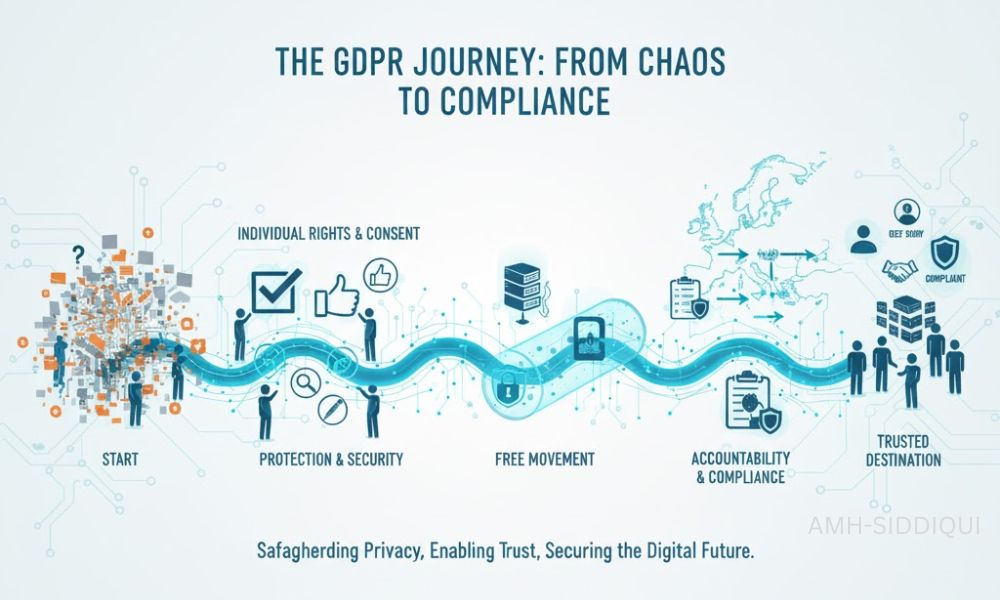
Explanation
Article 1 of GDPR sets out the overarching purpose of the regulation: to provide rules for processing personal data and ensuring its free movement within the European Union (EU). The article focuses on two core principles: protecting the fundamental rights and freedoms of natural persons and ensuring their right to personal data protection.
In simple terms, GDPR is designed to prevent misuse of personal information while allowing businesses and individuals to process and share data lawfully and securely. This means that any entity handling personal data must do so responsibly, respecting individuals’ privacy and giving them control over their information.
By explicitly mentioning the “free movement of personal data,” GDPR ensures that the regulation does not unnecessarily restrict legitimate business activities across EU member states. Instead, it provides a standardized framework, balancing business efficiency with personal privacy rights.
Key Points
Several key points can be extracted from Article 1:
- Scope of Regulation: GDPR applies to any processing of personal data, whether automated or manual, that occurs within the EU or affects EU citizens.
- Protection of Fundamental Rights: The regulation prioritizes the fundamental rights and freedoms of individuals, including the right to privacy and data protection.
- Free Movement of Data: Personal data should flow freely within the EU, provided that its processing complies with GDPR rules.
- Legal Framework: Article 1 establishes the legal foundation for the subsequent articles of GDPR, which elaborate on consent, data subject rights, obligations of data controllers, and more.
- Universal Applicability: GDPR is not limited to large corporations. Any organization processing personal data of EU residents, regardless of its location, must comply.
General Activation Steps
Implementing GDPR compliance, starting from Article 1, involves a systematic approach that organizations can follow:
- Awareness and Training: Educate employees about GDPR principles and the significance of personal data protection.
- Data Audit: Conduct a thorough audit of all personal data processed within the organization, including collection, storage, and sharing practices.
- Policy Development: Establish clear privacy policies that outline how data is processed, stored, and shared, aligning with GDPR requirements.
- Consent Mechanisms: Ensure that explicit consent is obtained from individuals before processing their personal data, and make it easy for them to withdraw consent.
- Data Protection Measures: Implement technical and organizational measures to protect data, including encryption, access controls, and regular monitoring.
- Documentation and Accountability: Maintain records of data processing activities and demonstrate compliance with GDPR principles.
These steps are fundamental in translating the objectives of Article 1 into actionable practices.
Use Cases
Understanding GDPR Article 1 is crucial for several real-world scenarios where personal data is involved:
- E-Commerce Platforms: Online retailers collecting customer data, such as names, addresses, and payment information, must ensure GDPR compliance to protect customer privacy and maintain trust.
- Healthcare Providers: Hospitals and clinics processing sensitive patient information must adhere to GDPR to prevent data breaches and unauthorised access.
- Marketing Agencies: Agencies handling email lists, customer profiles, and behavioural data must respect data subject rights and obtain proper consent for processing.
- Tech Companies: Social media platforms, cloud service providers, and app developers processing user data need GDPR-aligned policies to operate legally within the EU.
- Financial Institutions: Banks and fintech companies must secure personal and transactional data, ensuring compliance with GDPR to avoid penalties.
Dependencies
Effective GDPR implementation is not a standalone activity; it depends on several internal and external factors:
- Organizational Commitment: Compliance requires top-level management support and an organizational culture that prioritizes privacy.
- Regulatory Guidance: Organizations depend on official GDPR guidelines, regulatory updates, and national data protection authorities for accurate compliance measures.
- Data Mapping: Knowledge of where personal data resides and how it flows within and outside the organization is critical.
- Technology Infrastructure: Secure IT systems, encryption protocols, and access controls are necessary to support GDPR-compliant data handling.
- Third-Party Compliance: Organizations must ensure that vendors, partners, and service providers also follow GDPR requirements, as their actions impact overall compliance.
Tools and Technologies
Several tools and technologies can simplify GDPR compliance and make the objectives of Article 1 actionable:
- Data Discovery Tools: These help locate and classify personal data across organizational systems, ensuring complete visibility.
- Consent Management Platforms (CMPs): CMPs streamline obtaining and managing user consent, tracking changes, and documenting compliance.
- Data Protection Impact Assessment (DPIA) Tools: Facilitate risk assessments for data processing activities and help mitigate potential privacy risks.
- Encryption and Security Tools: Protect personal data during storage and transmission, preventing unauthorized access and breaches.
- Compliance Management Software: Provides dashboards, audit trails, and documentation to maintain regulatory compliance efficiently.
- Incident Response Solutions: Support quick detection, reporting, and mitigation of data breaches in line with GDPR mandates.
Let’s Wrap
Article 1 of GDPR is more than just a legal statement. It is am Article that sets the tone for how personal data should be handled across the EU and beyond. Implementing the protection of fundamental rights and ensuring the free movement of data, this provides the clear framework. The benefit of this that the organizations can understand and implement its principles and can build trust with their customers. It can also be helpful when connecting with the mitigate legal risks and creating a culture of privacy and accountability.
From understanding its core objectives to implementing compliance tools and processes, GDPR Article 1 serves as a guidepost for organisations. This article seeking to handle personal data responsibly while maintaining operational efficiency. Following its principles is not just a legal obligation, it’s a commitment to ethical data stewardship in an increasingly digital world.
For Your Further Reading:
- KSA PDPL – Article 35 (Enforcement and Penalties in Data Privacy)
- KSA PDPL – Article 37 (Oversight, and Enforcement)
- Big Data – DVR (Data Value Realization)
- Big Data Transformation Across Industries – Adoption Drivers and Key Strategies
- BDaaS (Big Data As-a-Service) – Compliance Features
- KSA NDMO – Data Catalog and Metadata – Data Catalog Plan – MCM.1.1 P1
- BDaaS (Big Data As-a-Service) – Real World Use Cases, and Scenarios
- BDaaS (Big Data As-a-Service) – Enablement Methodology
- BDaaS (Big Data As-a-Service) – Challenges & Risks in BDaaS Implementation
- BDaaS (Big Data As-a-Service) – Continuous Improvement Cycle
- BDaaS (Big Data As-a-Service) – Shared Responsibility Model
- How to Measure the Value of Data – NDMO (DVR-01)
- Data Management – Define Data Security Standards
- KSA NDMO – Data Catalog and Metadata – Data Sources Prioritization MCM.1.2 – P1
- Enterprise Architecture Governance
- KSA PDPL – Article 23 (Ensuring Privacy and Rights Protection in Health Data Processing)
- KSA PDPL – Article 28 (Legal Limitations on Copying Identifiable Data)
