










Abstract
EU GDPR Article 32 focuses on one of the most critical aspects of data protection: security of processing. It places a direct responsibility on both data controllers and data processors to implement appropriate technical and organizational measures to protect personal data. Rather than prescribing a one-size-fits-all solution, Article 32 introduces a risk-based approach, requiring organizations to evaluate potential threats and apply safeguards proportional to those risks. This article explains Article 32 in detail, highlighting its key principles, practical implementation steps, real-world use cases, dependencies, and the tools and technologies that support compliance.
Explanation
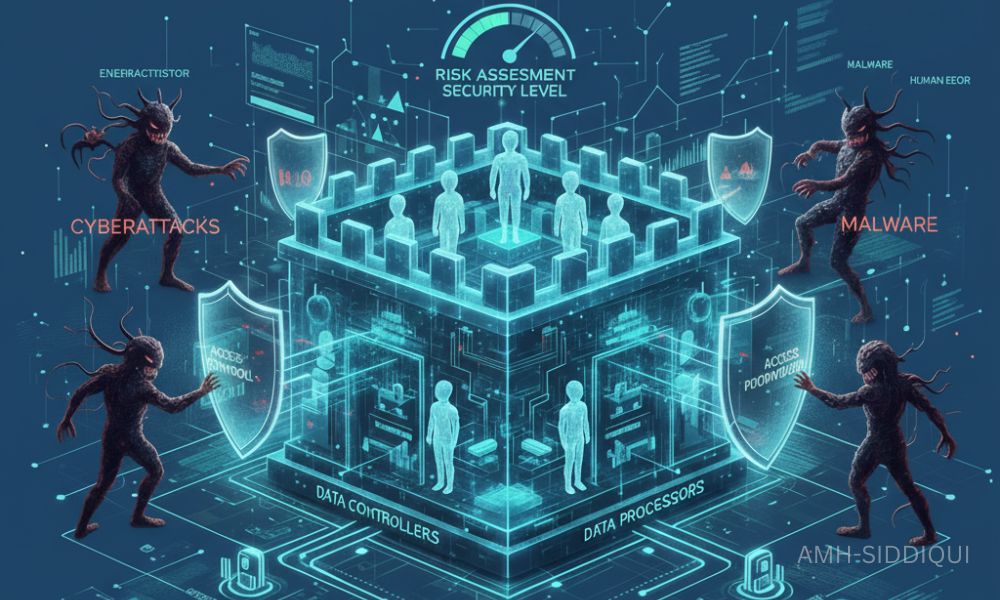
Article 32 of the GDPR mandates that organizations must ensure a level of security appropriate to the risk, associated with processing personal data. This applies to both controllers, who determine the purpose and means of processing, and processors, who process data on behalf of controllers.
The regulation acknowledges that security risks vary depending on factors such as the nature of the data, processing methods, and potential harm to individuals. Therefore, organizations are expected to assess risks such as unauthorized access, accidental loss, destruction, or alteration of personal data.
Article 32 emphasizes that security is not a one-time action but an ongoing process. Organizations must regularly review, test, and update their security measures in response to evolving threats, technological advancements, and organizational changes. Importantly, failure to comply with Article 32 can result in severe financial penalties and reputational damage.
Key Points
Some of the most important elements of GDPR Article 32 include:
- Risk-Based Security Approach: Security measures must be proportionate to the level of risk involved in processing personal data.
- Confidentiality, Integrity, and Availability: Organizations must protect data from unauthorized access, ensure accuracy, and maintain accessibility when needed.
- Technical and Organizational Measures: Security is not just about technology; it also includes policies, training, and internal controls.
- Examples of Measures: These include encryption, pseudonymization, access controls, regular testing, and incident response plans.
- Shared Responsibility: Both controllers and processors are equally responsible for ensuring appropriate security.
General Activation Steps
To activate and maintain compliance with Article 32, organizations should follow these general steps:
- Conduct a Risk Assessment: Identify potential threats to personal data, including cyberattacks, human error, and system failures.
- Classify Personal Data: Determine whether the data is sensitive, such as health data or financial information, which may require stronger protection.
- Implement Technical Measures: Apply safeguards like encryption, secure authentication, firewalls, and secure backups.
- Apply Organizational Controls: Establish internal policies, define user roles, limit access, and train employees on data protection practices.
- Test and Evaluate Security Measures: Regularly test systems through audits, vulnerability assessments, and penetration testing.
- Document Security Decisions: Keep records of risk assessments and implemented measures to demonstrate compliance.
Use Cases
Article 32 applies across industries and organizational sizes. Some practical use cases include:
- E-Commerce Platforms: Online retailers use encryption and secure payment gateways to protect customer payment and identity data.
- Healthcare Providers: Hospitals apply strict access controls and data segmentation to safeguard sensitive medical records.
- Financial Institutions: Banks implement multi-factor authentication and continuous monitoring to prevent fraud and data breaches.
- Remote Work Environments: Organizations secure remote access through VPNs, endpoint protection, and employee cyber security training.
- Cloud-Based Services: Companies rely on secure cloud configurations and contractual agreements with cloud providers to ensure GDPR-compliant security.
Dependencies
GDPR Article 32 does not operate in isolation and depends on other GDPR principles and requirements, including:
- Article 5 (Principles of Processing) – Especially integrity and confidentiality, which align directly with security obligations.
- Article 25 (Data Protection by Design and by Default) – Security measures should be embedded into systems from the outset.
- Article 28 (Processor Obligations) – Controllers must ensure processors provide sufficient guarantees of security.
- Article 33 and 34 (Data Breach Notification) – Strong security measures help prevent breaches and reduce reporting obligations.
These dependencies highlight that Article 32 is a foundational pillar supporting overall GDPR compliance.
Tools and Technologies
Organizations can rely on a wide range of tools and technologies to meet Article 32 requirements:
- Encryption Tools: Protect data at rest and in transit to prevent unauthorized access.
- Access Management Systems: Role-based access control (RBAC) and identity management solutions limit data exposure.
- Firewall and Network Security Tools: Prevent unauthorized network access and monitor suspicious activity.
- Backup and Recovery Solutions: Ensure data availability and rapid recovery in case of system failures.
- Security Monitoring and SIEM Tools: Detect threats in real time and respond quickly to incidents.
- Employee Training Platforms: Improve human-level security awareness and reduce risks caused by phishing or negligence.
Let’s Wrap
EU GDPR Article 32 underscores that data security is not optional, it is a legal obligation. By adopting a risk-based approach, organizations can tailor their security measures to the nature and scope of their data processing activities. Compliance with Article 32 not only helps avoid regulatory penalties but also builds trust with customers, partners, and stakeholders.
In a digital landscape where data breaches are increasingly common, Article 32 serves as a reminder that protecting personal data is an ongoing responsibility. Organizations that proactively invest in strong technical safeguards, organizational practices, and continuous improvement will be better positioned to meet GDPR requirements and safeguard personal data effectively
For further reading:
- EU GDPR – Article 31 (Cooperation with the Supervisory Authority)
- EU GDPR – Article 30 (Records of Processing Activities)
- EU GDPR – Article 29 (Processing Under the Authority of the Controller or Processor)
- EU GDPR – Article 28 (Processor)
- EU GDPR – Article 27 (Representatives of Controllers or Processors Not Established in the Union)
- EU GDPR – Article 26 (Joint Controllers)
- EU GDPR – Article 25 (Data Protection by Design and by Default)
- EU GDPR – Article 24 (Responsibility of the Controller)
- EU GDPR – Article 23 (Restrictions on Data Subject Rights)
- EU GDPR – Article 22 (Automated Individual Decision-Making, Including Profiling)
- EU GDPR – Article 21 (Right to Object)
- EU GDPR – Article 20 (Right to Data Portability)
- EU GDPR – Article 19 (Notification Obligation Regarding Rectification or Erasure of Personal Data or Restriction of Processing)
- EU GDPR – Article 18 (Right to Restriction of Processing)
- EU GDPR – Article 17 (Right to Be Forgotten)
- EU GDPR – Article 16 (Right to Rectification)
- EU GDPR – Article 15 (Right of Access by the Data Subject)
