










Abstract
The General Data Protection Regulation (GDPR) gives individuals strong control over how their personal data is handled. One of its important protections is the right to raise concerns when something feels wrong. Article 77 focuses on this by allowing any data subject to lodge a complaint with a supervisory authority if they believe their data has been misused. This right ensures that individuals are not left powerless and can seek accountability from organizations that fail to follow data protection rules. It also plays a key role in maintaining trust between individuals, businesses, and regulatory bodies across the European Union.
Explanation
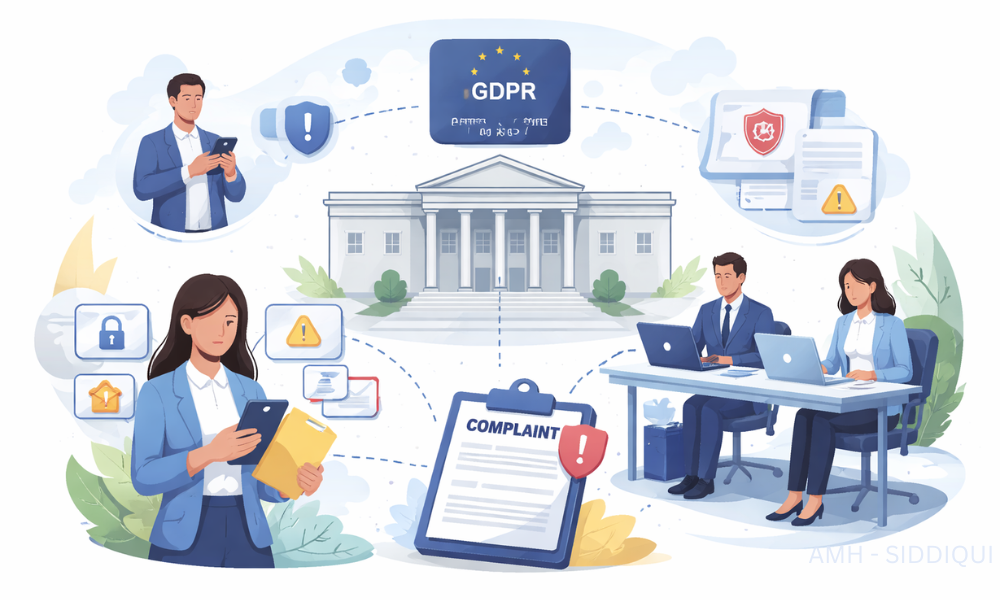
Article 77 gives you the freedom to take action if you think your personal data is being processed in a way that violates GDPR. Instead of trying to resolve everything directly with a company, you can go to a supervisory authority, an official body responsible for monitoring data protection laws in each EU member state.
You don’t need to be an expert in law to file a complaint. If something feels off, such as your data being used without permission, shared improperly, or stored longer than necessary, you can raise your concern. The supervisory authority is then responsible for investigating the issue and informing you about the progress and outcome of your complaint.
Another important aspect is flexibility. You can submit your complaint in the country where you live, where you work, or where the issue took place. This makes the process more accessible and user-friendly, especially when dealing with companies operating across borders.
Key Points
- Every individual has the right to lodge a complaint if they believe their data rights are violated
- Complaints can be submitted to a supervisory authority in your country of residence, workplace, or where the violation occurred
- You do not need legal expertise to file a complaint
- Supervisory authorities must investigate and respond to complaints
- Individuals must be informed about the progress and outcome of their complaint
- This right works alongside other GDPR rights like access, rectification, and erasure
General Activation Steps
- Identify the issue clearly, such as unauthorized data use or lack of transparency
- Gather any relevant information or evidence, like emails, screenshots, or account details
- Visit the official website of your local supervisory authority
- Fill out the complaint form or submit your concern through the provided channel
- Provide details about the organization involved and the nature of the issue
- Submit the complaint and keep a record of your submission
- Wait for acknowledgment and follow updates from the authority
Use Cases
- Unauthorized Data Sharing: You notice that your personal data has been shared with third parties without your consent. For example, receiving marketing emails from companies you never interacted with. Filing a complaint helps investigate how your data was distributed.
- Lack of Transparency: A company collects your information but does not clearly explain how it will be used. If privacy policies are vague or missing, you can raise this concern with a supervisory authority.
- Ignoring Data Subject Requests: You ask a company to delete your data or provide access to it, but they fail to respond within the required timeframe. This is a common situation where Article 77 becomes useful.
- Data Breach Concerns: You suspect your personal data has been exposed due to a breach, but the organization has not informed you properly. A complaint can trigger an official investigation.
- Excessive Data Collection: An app or service collects more information than necessary for its function. This could include access to contacts, location, or personal files without justification.
- Cross-Border Data Issues: A company operating in multiple countries mishandles your data. You can still file a complaint in your own country, making it easier to address international concerns.
Dependencies
- Supervisory Authorities: These bodies are central to Article 77. Their efficiency, resources, and responsiveness directly impact how complaints are handled. Each EU country has its own authority, and cooperation between them is often required.
- Awareness of Rights: The effectiveness of this right depends on whether individuals know it exists. Without awareness, many violations may go unreported.
- Organizational Compliance Systems: Companies must have proper data protection measures in place. Weak systems increase the likelihood of complaints and regulatory action.
- Legal Framework and Procedures: Clear rules and processes are necessary for handling complaints fairly and consistently. This includes timelines, investigation methods, and communication standards.
- Cross-Border Cooperation Mechanisms: Since many organizations operate internationally, authorities must work together to resolve cases efficiently.
- Technology Infrastructure: Secure systems are needed for submitting, tracking, and managing complaints. This ensures confidentiality and proper handling of sensitive information.
Tools and Technologies
- Online Complaint Portals: Most supervisory authorities provide digital platforms where you can submit complaints. These portals simplify the process and guide you step by step.
- Data Protection Management Software: Organizations use tools to track data processing activities, manage consent, and respond to user requests. These systems help reduce violations and complaints.
- Incident Tracking Systems: These tools allow companies and authorities to monitor complaints, identify patterns, and improve responses over time.
- Encryption Technologies: Used to protect personal data during storage and transmission, reducing the risk of breaches that may lead to complaints.
- Audit and Compliance Tools: These help organizations regularly review their data practices and ensure they meet GDPR requirements.
- Communication Platforms: Secure communication tools enable smooth interaction between individuals, companies, and supervisory authorities during investigations.
Let’s Wrap
Article 77 puts power directly in your hands. It gives you a clear path to speak up when your data rights are not respected. You don’t have to deal with issues alone or feel stuck if a company ignores your concerns. By allowing complaints to be filed easily and locally, GDPR ensures that your voice matters.
At the same time, this right pushes organizations to stay responsible. Knowing that individuals can report issues encourages better data handling practices and stronger accountability. In the bigger picture, Article 77 helps build a safer and more transparent digital environment where trust is not just expected, it is enforced.
If you ever feel uncertain about how your data is being used, remember that you have the right to question it, challenge it, and take action when needed.
For further reading:
- EU GDPR – Article 76 (Confidentiality)
- EU GDPR – Article 75 (Secretariat)
- EU GDPR – Article 74 (Tasks of the Chair)
- EU GDPR – Article 73 (Chair)
- EU GDPR – Article 72 (Procedure)
- EU GDPR – Article 71 (Reports)
- EU GDPR – Article 70 (Tasks of the Board)
- EU GDPR – Article 69 (Independence)
- EU GDPR – Article 68 (European Data Protection Board)
- EU GDPR – Article 67 (Exchange of Information)
- EU GDPR – Article 66 (Urgency Procedure)
- EU GDPR – Article 65 (Dispute resolution by the Board)
- EU GDPR – Article 64 (Opinion of the Board)
- EU GDPR – Article 63 (Consistency Mechanism)
- EU GDPR – Article 62 (Joint Operations of Supervisory Authorities)
- EU GDPR – Article 61(Mutual assistance)
- EU GDPR – Article 60 (Cooperation Between Supervisory Authorities)
