










Abstract
EU GDPR Article 43 focuses on the role of certification bodies in the data protection ecosystem. These bodies are responsible for issuing, maintaining, and renewing GDPR certifications, helping organizations prove that they handle personal data in line with the regulation. By setting rules for accreditation, oversight, and accountability, Article 43 makes sure certifications are trustworthy, consistent, and meaningful across the EU. For businesses, certification can act as a visible sign of compliance, while for individuals, it adds another layer of confidence in how their data is treated.
Explanation
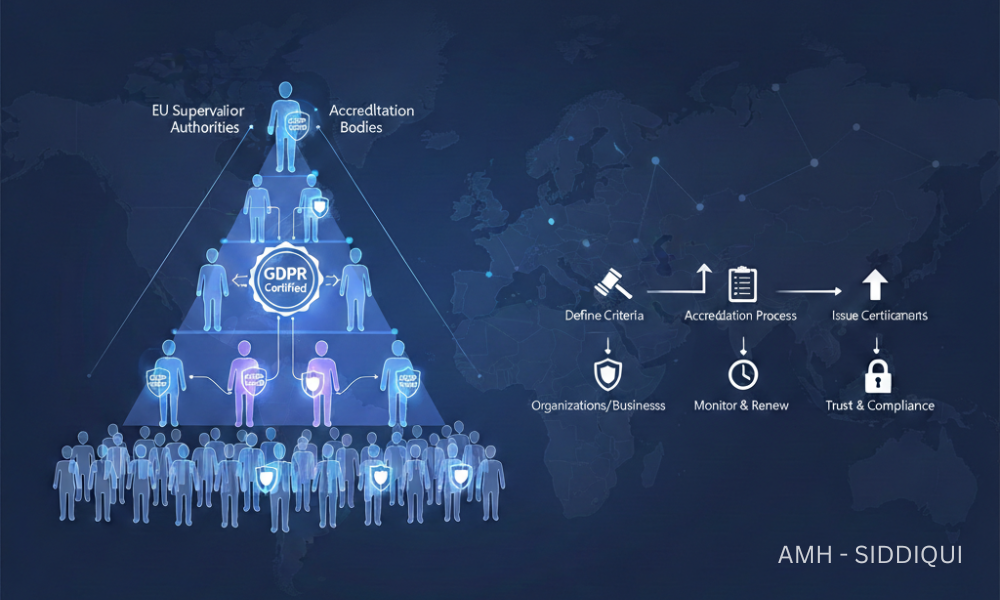
GDPR certifications are not meant to replace legal compliance, but they do make compliance easier to demonstrate. Article 43 explains who can issue these certifications and under what conditions. Certification bodies must be accredited either by a national supervisory authority or by a national accreditation body, following standards approved at the EU level.
The idea is simple: not just anyone can hand out GDPR certificates. Certification bodies must show they have the right expertise, independence, and processes in place. They must also operate transparently and be subject to regular monitoring. If a certification body fails to meet these standards, its accreditation can be limited, suspended, or withdrawn.
Article 43 also works closely with Article 42, which encourages the use of certification mechanisms. While Article 42 talks about what certification is for, Article 43 focuses on who can issue it and how credibility is maintained.
Key Points
- Certification bodies must be formally accredited before issuing GDPR certifications
- Accreditation can be granted by supervisory authorities or national accreditation bodies
- Certification bodies must act independently and avoid conflicts of interest
- Certifications are time-limited and must be renewed periodically
- Certification does not remove legal responsibility from controllers or processors
- Ongoing monitoring ensures certifications remain reliable
- Supervisory authorities retain oversight and enforcement powers
General Activation Steps
- A Member State designates or approves an accreditation authority responsible for certification bodies
- Criteria for accreditation are defined, aligned with GDPR and EU-approved standards
- Certification bodies apply for accreditation and undergo assessment
- Accredited bodies are allowed to issue GDPR certifications
- Organizations apply for certification and go through audits or assessments
- Certifications are issued for a fixed period
- Certification bodies monitor compliance during the certification lifecycle
- Certifications are renewed, suspended, or withdrawn based on continued compliance
Use Cases
- Demonstrating GDPR compliance to clients: Organizations use certifications to show customers, partners, and regulators that data protection rules are taken seriously and followed in daily operations.
- Vendor and processor selection: Companies choosing third-party vendors can rely on GDPR certifications as part of their due diligence process, reducing risk and saving time.
- Cross-border data processing: Certifications help build trust when data is transferred or processed across different EU countries, especially in complex supply chains.
- Internal compliance alignment: Preparing for certification often helps organizations identify gaps, improve policies, and align teams around shared data protection practices.
- Market differentiation: Certified organizations can stand out in competitive markets where privacy and data protection influence customer decisions.
- Public sector accountability: Public bodies can use certification to demonstrate transparency and responsible handling of citizen data.
Dependencies
- Article 42 (Certification mechanisms): Article 43 relies on Article 42, which establishes the purpose and value of certification under GDPR.
- National supervisory authorities: These authorities define accreditation criteria and monitor certification bodies within their jurisdiction.
- National accreditation bodies: In some Member States, these bodies play a key role in evaluating and accrediting certification bodies.
- European Data Protection Board (EDPB): The EDPB helps ensure consistency across Member States by approving certification criteria and frameworks.
- International standards: Certification bodies often rely on recognized standards such as ISO/IEC frameworks to structure assessments.
- Organizational compliance programs: Certifications depend on internal policies, training, documentation, and operational controls already in place.
Tools and Technologies
- Compliance management platforms: These tools help track GDPR requirements, document controls, and prepare evidence needed for certification audits.
- Audit and assessment software: Used by certification bodies to evaluate processes, controls, and risk management practices.
- Data mapping and inventory tools: Support organizations in identifying where personal data is stored, processed, and transferred.
- Risk assessment tools: Help evaluate privacy risks and demonstrate that appropriate safeguards are in place.
- Document management systems: Enable secure storage and version control of policies, procedures, and audit records.
- Monitoring and reporting tools: Allow ongoing checks to ensure certified practices continue to be followed after certification is issued.
Let’s Wrap
GDPR Article 43 plays a quiet but powerful role in building trust across the data protection landscape. By setting clear rules for who can issue certifications and how they are monitored, it ensures that GDPR certificates actually mean something. For organizations, working with accredited certification bodies can simplify compliance efforts and boost credibility. For regulators and individuals, it adds reassurance that certifications are based on real standards, not just labels.
In a world where data moves fast and trust matters more than ever, Article 43 helps keep GDPR certifications honest, consistent, and reliable, exactly what they were meant to be.
For further reading:
- EU GDPR – Article 42 (Certification)
- EU GDPR – Article 41 (Monitoring of Approved Codes of Conduct
- EU GDPR – Article 40 (Codes of Conduct)
- EU GDPR – Article 39 (Tasks of the Data Protection Officer)
- EU GDPR – Article 38 (Position of the Data Protection Officer (DPO))
- EU GDPR – Article 37 (Designation of the Data Protection Officer (DPO))
- EU GDPR – Article 36 (Prior Consultation)
- EU GDPR – Article 35 (Data Protection Impact Assessment (DPIA))
- EU GDPR – Article 34 (Communication of a Personal Data Breach to the Data Subject)
- EU GDPR – Article 33 (Notification of a Personal Data Breach to the Supervisory Authority
- EU GDPR – Article 32 (Security of Processing)
- EU GDPR – Article 31 (Cooperation with the Supervisory Authority)
- EU GDPR – Article 30 (Records of Processing Activities)
- EU GDPR – Article 29 (Processing Under the Authority of the Controller or Processor)
- EU GDPR – Article 28 (Processor)
- EU GDPR – Article 27 (Representatives of Controllers or Processors Not Established in the Union)
- EU GDPR – Article 26 (Joint Controllers)
