










Abstract
EU GDPR Article 38 defines the position, authority, and operational independence of the Data Protection Officer (DPO) within an organization. It ensures that the DPO is fully involved in all matters relating to the protection of personal data and is supported by both controllers and processors in performing their duties. Article 38 emphasizes independence, access to resources, protection from conflicts of interest, and freedom from instruction regarding how DPO tasks are carried out. This article plays a crucial role in strengthening organizational accountability and promoting effective data protection governance under the GDPR.
Explanation
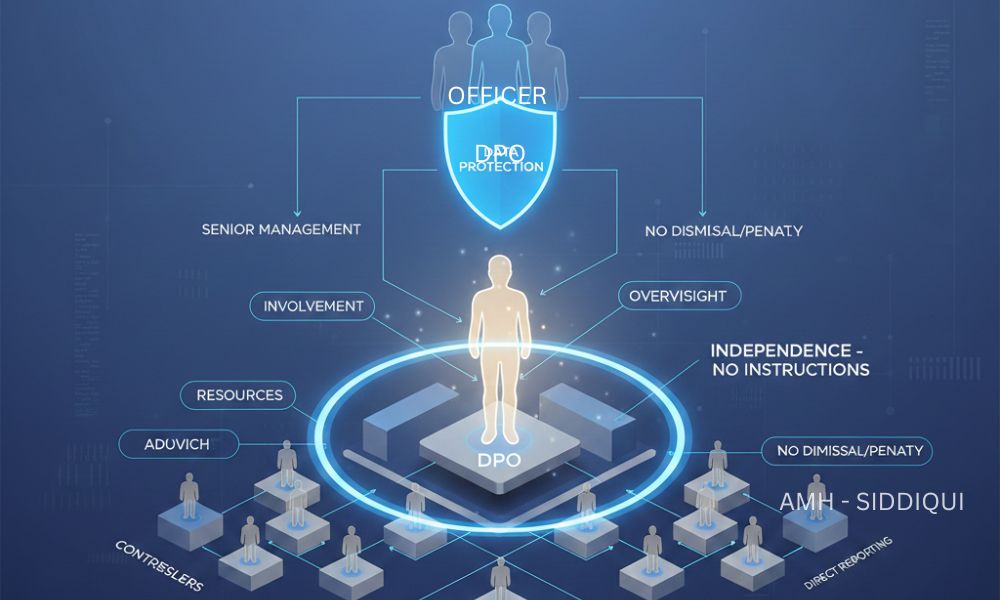
Article 38 of the GDPR focuses on how the Data Protection Officer should be positioned within an organization, rather than defining their duties (which are covered under Article 39). The regulation requires that the DPO be involved “properly and in a timely manner” in all issues relating to personal data protection. This involvement must not be superficial; instead, the DPO should be integrated into relevant decision-making processes from the outset.
The article also mandates that controllers and processors support the DPO by providing necessary resources, access to personal data, processing operations, and ongoing training. Importantly, the DPO must act independently and must not receive instructions regarding the execution of their tasks. This independence ensures unbiased advice and oversight.
Additionally, Article 38 protects the DPO from dismissal or penalties for performing their responsibilities and requires that the DPO report directly to the highest management level. These safeguards reinforce the DPO’s ability to uphold GDPR compliance without internal pressure or conflicts of interest.
Key Points
- The DPO must be involved in all matters relating to personal data protection
- Controllers and processors must provide adequate resources and support
- The DPO must operate independently and without instruction
- The DPO should report directly to senior management
- Organizations must ensure no conflict of interest for the DPO role
- The DPO must not be dismissed or penalized for performing their tasks
- Data subjects must be able to contact the DPO easily
General Activation Steps
To effectively activate GDPR Article 38 within an organization, the following steps should be taken:
- Formally Appoint the DPO: Clearly define the DPO’s role in internal policies, employment contracts, or service agreements.
- Integrate the DPO Early: Ensure the DPO is involved from the planning stage of projects involving personal data, such as system design or new processing activities.
- Provide Resources and Access: Allocate sufficient budget, staff, tools, and access to relevant data processing activities to enable the DPO to perform their duties effectively.
- Ensure Independence: Establish governance structures that prevent management from influencing the DPO’s decisions or advice.
- Define Reporting Lines: Allow the DPO to report directly to top-level management, such as the board or executive leadership.
- Avoid Conflicts of Interest: Ensure the DPO does not hold roles that determine the purposes or means of data processing.
- Communicate DPO Contact Details: Make DPO contact information easily accessible to data subjects and supervisory authorities.
Use Cases
Article 38 applies across various organizational scenarios, including:
- Large Enterprises: Multinational corporations rely on independent DPOs to oversee complex, cross-border data processing operations.
- Healthcare Organizations: DPOs are involved in ensuring sensitive health data is processed lawfully and securely.
- Technology and SaaS Companies: DPOs advise on privacy-by-design during software development and cloud data processing.
- Public Authorities: Government bodies depend on DPOs to ensure transparency and compliance in public data handling.
- E-commerce Platforms: DPOs guide compliance in customer profiling, payment processing, and marketing activities.
In each case, early involvement and independence of the DPO prevent compliance gaps and regulatory risks.
Dependencies
Effective implementation of Article 38 depends on several organizational and regulatory factors:
- Article 37 – Determines when a DPO must be appointed
- Article 39 – Defines the tasks and responsibilities of the DPO
- Senior Management Support – Without leadership backing, DPO independence may be compromised
- Organizational Governance Structure – Clear reporting lines and role definitions are essential
- Training and Awareness Programs – Staff must understand the DPO’s authority and role
These dependencies ensure that Article 38 functions as part of a broader GDPR compliance framework.
Tools and Technologies
Organizations can support DPOs under Article 38 by leveraging the following tools and technologies:
- Data Protection Management Software: For maintaining records of processing activities and compliance documentation.
- Privacy Impact Assessment (DPIA) Tools: To assist DPOs in assessing high-risk data processing activities.
- Incident and Breach Management Systems: Enabling timely reporting and response to personal data breaches.
- Training and E-Learning Platforms: Supporting ongoing education for DPOs and staff on GDPR requirements.
- Secure Communication Channels: Allowing confidential communication between the DPO, management, and supervisory authorities.
These tools enhance efficiency while reinforcing the DPO’s independence and effectiveness.
Let’s Wrap
EU GDPR Article 38 establishes the foundation for a strong, independent, and well-supported Data Protection Officer within organizations. By ensuring early involvement, operational independence, adequate resources, and direct access to senior management, Article 38 strengthens accountability and promotes a culture of data protection.
For organizations processing personal data, compliance with Article 38 is not just a legal requirement, it is a strategic investment in trust, transparency, and long-term regulatory resilience. When the DPO is empowered and respected, GDPR compliance becomes proactive rather than reactive, benefiting both organizations and data subjects alike.
For further reading:
- EU GDPR – Article 37 (Designation of the Data Protection Officer (DPO))
- EU GDPR – Article 36 (Prior Consultation)
- EU GDPR – Article 35 (Data Protection Impact Assessment (DPIA))
- EU GDPR – Article 34 (Communication of a Personal Data Breach to the Data Subject)
- EU GDPR – Article 33 (Notification of a Personal Data Breach to the Supervisory Authority
- EU GDPR – Article 32 (Security of Processing)
- EU GDPR – Article 31 (Cooperation with the Supervisory Authority)
- EU GDPR – Article 30 (Records of Processing Activities)
- EU GDPR – Article 29 (Processing Under the Authority of the Controller or Processor)
- EU GDPR – Article 28 (Processor)
- EU GDPR – Article 27 (Representatives of Controllers or Processors Not Established in the Union)
- EU GDPR – Article 26 (Joint Controllers)
- EU GDPR – Article 25 (Data Protection by Design and by Default)
- EU GDPR – Article 24 (Responsibility of the Controller)
- EU GDPR – Article 23 (Restrictions on Data Subject Rights)
- EU GDPR – Article 22 (Automated Individual Decision-Making, Including Profiling)
- EU GDPR – Article 21 (Right to Object
