










Abstract
GDPR is not just a list of strict rules, it also gives organizations practical ways to apply data protection in real life. One of the most useful tools for this is explained in Article 40, which focuses on codes of conduct. This article encourages Member States, supervisory authorities, the European Data Protection Board (EDPB), and the European Commission to support industry-specific codes that help organizations apply GDPR correctly. Instead of guessing how the law fits your sector, codes of conduct offer shared guidance, clarity, and consistency. They help businesses, associations, and professionals turn legal requirements into everyday practices.
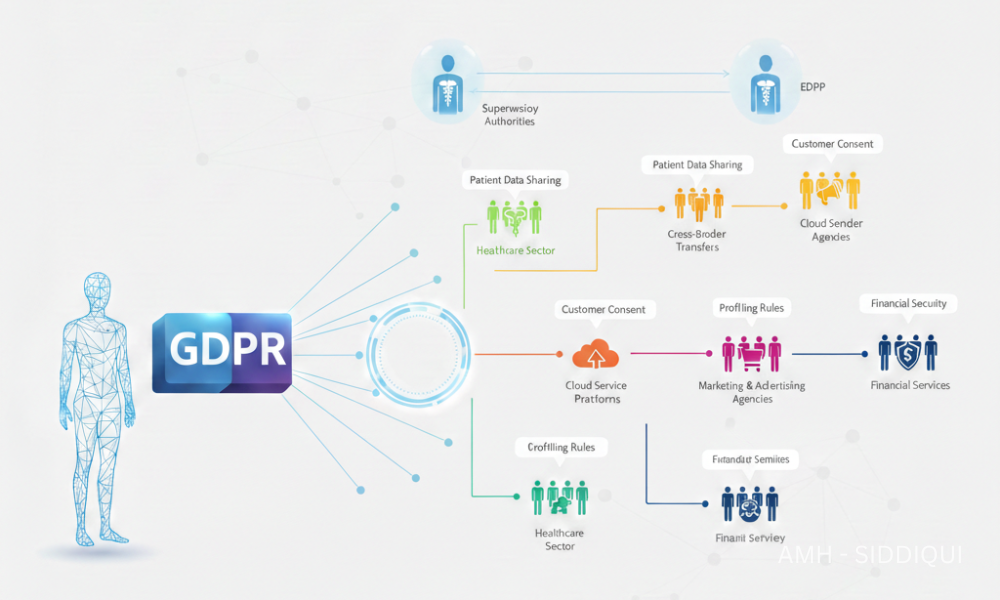
Explanation
Article 40 exists because GDPR applies to many industries that work very differently, healthcare, finance, e-commerce, education, cloud services, and more. A one-size-fits-all approach does not always work. That’s where codes of conduct come in.
A code of conduct is a set of practical rules created by industry groups or associations to explain how GDPR should be applied in a specific sector. These codes must follow GDPR principles and be approved by a supervisory authority. Once approved, they act as a trusted reference point for organizations that want to handle personal data correctly.
Article 40 also makes it clear that regulators are not working against organizations. Instead, they are encouraged to work with industries, helping them design codes that promote compliance, accountability, and trust.
Key Points
- Article 40 promotes sector-specific GDPR guidance through approved codes of conduct.
- Codes help translate legal obligations into clear, usable practices.
- They are created by associations or industry bodies, not individual companies.
- Supervisory authorities review and approve these codes.
- The European Data Protection Board ensures consistency across the EU.
- Approved codes support transparency, accountability, and user trust.
- Compliance with a code does not replace GDPR obligations but supports them.
General Activation Steps
- Identify the need: An industry or sector recognizes common GDPR challenges that affect many organizations in the same way.
- Form an industry group or association: A representative body takes responsibility for drafting the code.
- Draft the code of conduct: The code explains how GDPR principles apply to real-world activities within that sector.
- Consult stakeholders: Input is gathered from members, legal experts, and data protection professionals.
- Submit to the supervisory authority: The draft code is reviewed to ensure it aligns with GDPR.
- Approval and registration: Once approved, the code may be registered at EU level if it applies across borders.
- Monitoring and enforcement: Independent bodies monitor compliance with the code.
Use Cases
- Healthcare sector: A healthcare code of conduct can explain how patient data should be shared between hospitals, labs, and insurers while respecting consent and confidentiality.
- Cloud service providers: A code can clarify responsibilities between data controllers and processors, especially when handling cross-border data transfers.
- E-commerce platforms: Online retailers can use a shared code to define best practices for customer data, payment details, and marketing communications.
- Marketing and advertising agencies: Codes help standardize consent management, profiling rules, and data retention policies.
- Financial services: Banks and fintech companies can align on how to manage sensitive financial data securely and lawfully.
Each use case benefits from clear expectations, fewer misunderstandings, and stronger user confidence.
Dependencies
- Strong industry representation: Codes only work when they reflect real industry practices and challenges.
- Regulatory cooperation: Supervisory authorities must actively guide and assess proposed codes.
- Legal expertise: GDPR interpretation must be accurate and aligned with existing laws.
- Monitoring bodies: Independent organizations are needed to check compliance and handle breaches.
- Cross-border alignment: For EU-wide codes, coordination with the EDPB is essential.
- Ongoing updates: Codes must evolve as technology, risks, and interpretations change.
Tools and Technologies
Data protection management platforms: These help organizations align internal processes with code requirements.
- Consent management tools: Useful for sectors dealing with large-scale user consent.
- Audit and compliance software: Supports monitoring adherence to approved codes.
- Encryption and access control systems: Essential for meeting security expectations outlined in codes.
- Training platforms: Help staff understand and follow sector-specific GDPR guidance.
- Documentation and reporting tools: Support transparency and accountability obligations.
Let’s Wrap
Article 40 shows that GDPR is not meant to slow innovation or overwhelm organizations. Instead, it encourages collaboration, shared responsibility, and practical guidance. Codes of conduct help you move from theory to action, offering clarity in complex data protection situations.
If you operate in a regulated or fast-moving sector, an approved code of conduct can make GDPR easier to apply, easier to explain, and easier to trust. While it does not replace legal responsibility, it gives you a solid framework to work within, one that reflects your industry’s real needs.In simple terms, Article 40 is about making GDPR workable, realistic, and fair, for organizations and individuals alike.
For further reading:
- EU GDPR – Article 39 (Tasks of the Data Protection Officer)
- EU GDPR – Article 38 (Position of the Data Protection Officer (DPO))
- EU GDPR – Article 37 (Designation of the Data Protection Officer (DPO))
- EU GDPR – Article 36 (Prior Consultation)
- EU GDPR – Article 35 (Data Protection Impact Assessment (DPIA))
- EU GDPR – Article 34 (Communication of a Personal Data Breach to the Data Subject)
- EU GDPR – Article 33 (Notification of a Personal Data Breach to the Supervisory Authority
- EU GDPR – Article 32 (Security of Processing)
- EU GDPR – Article 31 (Cooperation with the Supervisory Authority)
- EU GDPR – Article 30 (Records of Processing Activities)
- EU GDPR – Article 29 (Processing Under the Authority of the Controller or Processor)
- EU GDPR – Article 28 (Processor)
- EU GDPR – Article 27 (Representatives of Controllers or Processors Not Established in the Union)
- EU GDPR – Article 26 (Joint Controllers)
- EU GDPR – Article 25 (Data Protection by Design and by Default)
- EU GDPR – Article 24 (Responsibility of the Controller)
- EU GDPR – Article 23 (Restrictions on Data Subject Rights)
