










Abstract
The General Data Protection Regulation (GDPR) created a strong framework to protect personal data across the European Union. One of the important elements within this framework is the European Data Protection Board (EDPB), which is defined in EU GDPR Article 68. The Board plays a central role in ensuring that data protection rules are applied consistently across all EU Member States.
Article 68 explains how the Board is structured and who becomes part of it. According to the regulation, the Board is composed of the head of one supervisory authority from each Member State, along with the European Data Protection Supervisor. This structure helps bring together national perspectives while maintaining a unified approach to data protection across the European Union.
By creating a central body of experts from different countries, the GDPR ensures that decisions related to privacy and data protection are coordinated and transparent. The Board works as a platform for cooperation, guidance, and alignment among supervisory authorities so that individuals and organizations experience consistent data protection standards across the EU.
Explanation
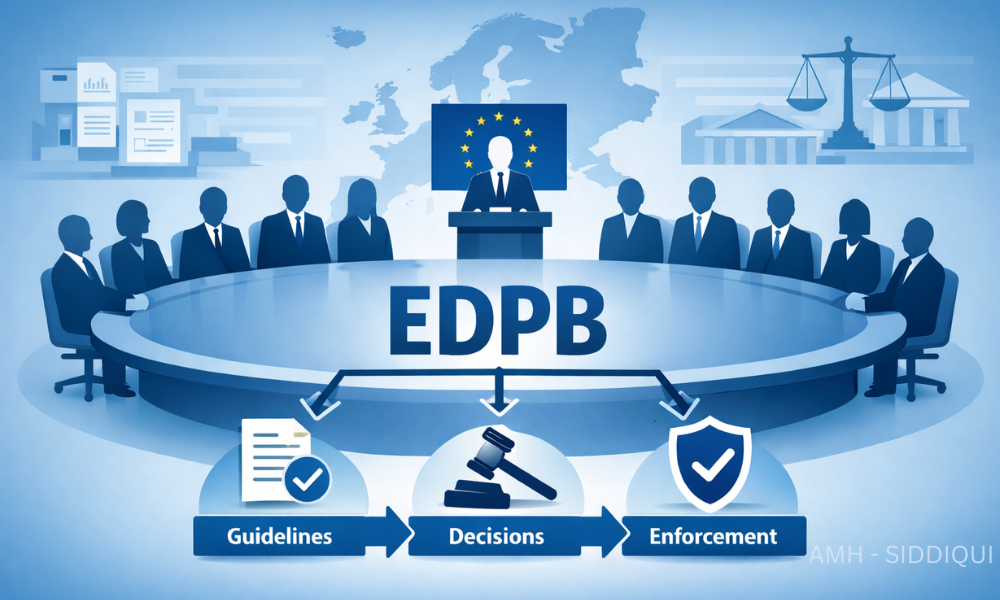
The European Data Protection Board was established to support the effective implementation of the General Data Protection Regulation across all EU Member States. Since each country has its own national data protection authority, differences in interpretation or enforcement could arise. Article 68 addresses this challenge by creating a body that brings together the leaders of these authorities to coordinate decisions and policies.
Under Article 68, the Board is composed of the head of the supervisory authority from every Member State. These representatives participate in discussions, vote on decisions, and contribute to guidance documents that help organizations understand how to apply GDPR rules. In addition, the European Data Protection Supervisor participates as a member because EU institutions also process personal data and must follow data protection rules.
The structure of the Board is designed to encourage collaboration. Every country has equal representation, which ensures that decisions are not dominated by a single authority. Instead, policies are shaped through collective discussion and shared expertise.The Board’s role goes beyond simple coordination. It can issue guidelines, recommendations, and best practices related to data protection. These documents help organizations understand how GDPR provisions should be interpreted in real-world situations.
Another important function of the Board is ensuring consistent enforcement. If different supervisory authorities disagree on a cross-border data protection case, the Board can help resolve the matter and guide authorities toward a unified decision.
Overall, Article 68 provides the organizational foundation for the European Data Protection Board. Without this structure, cooperation between national authorities would be more complicated, and the goal of consistent data protection across the EU would be harder to achieve.
Key Points
- Article 68 establishes the European Data Protection Board.The Board is part of the governance structure of the General Data Protection Regulation.
- Each EU Member State is represented by the head of its supervisory authority.
- The European Data Protection Supervisor is also a member of the Board.
- The Board ensures consistent interpretation and enforcement of GDPR rules.
- It promotes cooperation between national data protection authorities.
- The Board can issue guidelines, recommendations, and opinions related to data protection.
- It plays a role in resolving disagreements between supervisory authorities in cross-border cases.
General Activation Steps
- Formation of Supervisory Authorities: Each EU Member State establishes a national supervisory authority responsible for overseeing data protection compliance.
- Appointment of Representatives: The head of each national supervisory authority becomes a member of the European Data Protection Board.
- Participation of the European Data Protection Supervisor: The European Data Protection Supervisor joins the Board to represent EU institutions.
- Board Meetings and Collaboration: Members regularly meet to discuss data protection issues affecting multiple countries.
- Issuing Guidance and Opinions: The Board publishes guidelines and recommendations that clarify how GDPR provisions should be interpreted.
- Coordination of Enforcement: When cross-border cases arise, the Board supports cooperation and helps maintain consistent enforcement.
Use Cases
- Cross-Border Data Processing Issues: Large organizations often process personal data across multiple EU countries. If questions arise about compliance, supervisory authorities from different countries may need to work together. The Board helps coordinate these discussions and encourages consistent decisions.
- GDPR Interpretation Guidance: Organizations sometimes face uncertainty when interpreting GDPR provisions. The Board publishes guidelines and opinions that explain how certain rules should be applied in practice, helping businesses maintain compliance.
- Resolving Regulatory Differences: National authorities may interpret specific GDPR provisions differently. The Board provides a platform for discussion and alignment so that regulatory approaches remain consistent across the EU.
- Developing Best Practices: The Board collects expertise from multiple supervisory authorities. This allows it to develop best practice recommendations that help organizations improve their data protection measures.
- Supporting International Cooperation: Data protection challenges often involve global companies. The Board’s guidance helps ensure that EU privacy standards remain strong and consistent even when data flows across borders.
Dependencies
- National Supervisory Authorities: The Board depends on national supervisory authorities because its members are the heads of these organizations. Their participation ensures that each country contributes to the decision-making process.
- Legal Framework of the GDPR: The Board operates within the legal structure defined by the General Data Protection Regulation. All activities and decisions must align with the regulation’s provisions.
- European Data Protection Supervisor: The involvement of the European Data Protection Supervisor ensures coordination between EU institutions and national authorities.
- Cooperation Mechanisms: The Board relies on cooperation and consistency mechanisms defined within the GDPR to resolve disputes and coordinate actions.
- Information Sharing Systems: Effective communication between authorities requires secure platforms and structured information exchange processes.
Tools and Technologies
- Secure Communication Platforms: Supervisory authorities use secure digital communication systems to exchange sensitive information related to investigations and regulatory decisions.
- Case Management Systems: These systems help authorities track complaints, investigations, and regulatory actions, especially in cross-border cases.
- Data Protection Impact Assessment Tools: Organizations often rely on DPIA tools to evaluate privacy risks in new projects. The Board’s guidelines help shape how these tools are used.
- Legal and Compliance Software: Many companies use compliance platforms that integrate GDPR requirements. Guidance from the Board helps developers align these tools with regulatory expectations.
- Documentation and Knowledge Platforms: The Board publishes guidelines, recommendations, and opinions that organizations access through official documentation platforms.
Let’s Wrap
EU GDPR Article 68 establishes the organizational foundation of the European Data Protection Board, a key body responsible for maintaining consistent data protection standards across the European Union. By bringing together the heads of supervisory authorities from each Member State along with the European Data Protection Supervisor, the Board creates a cooperative environment where expertise and experience from different countries are combined.
This structure ensures that privacy rules under the General Data Protection Regulation are interpreted and enforced in a consistent manner. Through collaboration, guidance, and coordinated decision-making, the Board strengthens the overall effectiveness of the GDPR framework.
For organizations operating within the EU or handling EU residents’ personal data, understanding the role of the European Data Protection Board is important. Its guidance influences how data protection rules are interpreted and applied, making it a central pillar in the EU’s effort to protect individuals’ privacy rights.
For further reading:
- EU GDPR – Article 67 (Exchange of Information)
- EU GDPR – Article 66 (Urgency Procedure)
- EU GDPR – Article 65 (Dispute resolution by the Board)
- EU GDPR – Article 64 (Opinion of the Board)
- EU GDPR – Article 63 (Consistency Mechanism)
- EU GDPR – Article 62 (Joint Operations of Supervisory Authorities)
- EU GDPR – Article 61(Mutual assistance)
- EU GDPR – Article 60 (Cooperation Between Supervisory Authorities)
- EU GDPR – Article 59 (Activity Reports)
- EU GDPR – Article 58 (Powers of Supervisory Authorities)
- EU GDPR – Article 57 (Tasks of the Supervisory Authority)
- EU GDPR – Article 56 (Competence of the Lead Supervisory Authority)
- EU GDPR – Article 55 (Competence)
- EU GDPR – Article 54 (Rules on the Establishment of the Supervisory Authority)
- EU GDPR – Article 53 (General Conditions for the Members of the Supervisory Authority)
- EU GDPR – Article 52 (Independence)
- EU GDPR – Article 51 (Supervisory Authority)
