










Abstract
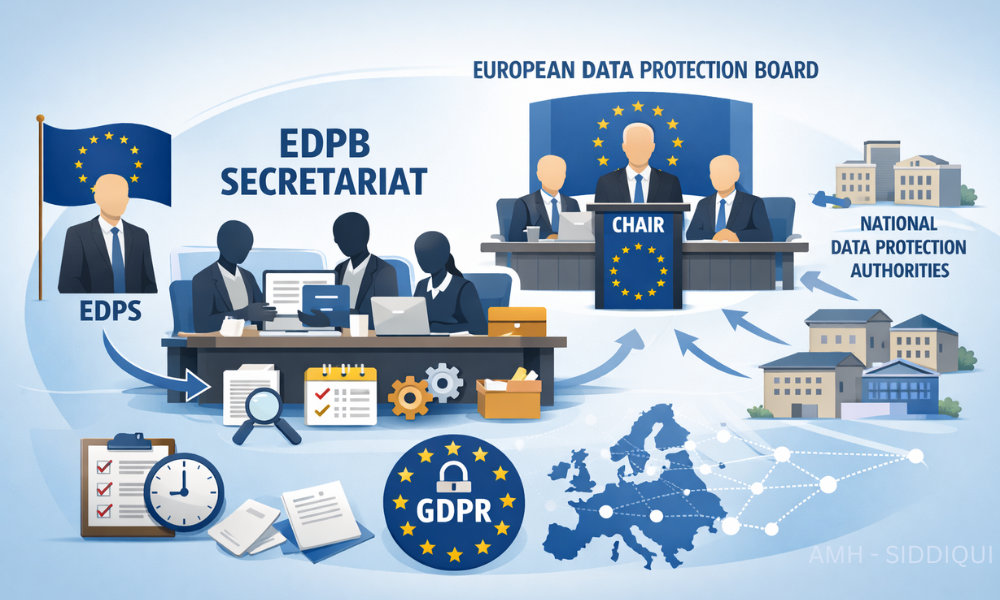
The General Data Protection Regulation (GDPR) established a comprehensive legal framework to protect personal data across the European Union. Within this system, the European Data Protection Board (EDPB) plays a central role in ensuring that data protection rules are applied consistently by supervisory authorities across member states. To support the effective functioning of the Board, the regulation provides for a dedicated secretariat. According to the provisions related to the secretariat, the European Data Protection Supervisor (EDPS) appoints a team that works exclusively under the direction of the Chair of the Board. This secretariat performs analytical, administrative, and logistical tasks that help the Board carry out its responsibilities smoothly. By organizing meetings, preparing documents, and assisting with coordination, the secretariat ensures that the Board can focus on strategic decision-making and consistent enforcement of data protection principles.
Explanation
The secretariat is an important operational component supporting the work of the European Data Protection Board. While the Board is responsible for high-level decisions, opinions, and guidance related to data protection, the secretariat ensures that the necessary background work and coordination take place behind the scenes.
Under the GDPR framework, the European Data Protection Supervisor appoints the secretariat. Even though the EDPS is responsible for selecting and hosting this team, the secretariat operates strictly under the instructions of the Chair of the Board. This structure helps maintain independence while still benefiting from the institutional support of the EDPS.
One of the primary roles of the secretariat is to provide analytical support. This includes assisting with research, preparing briefing materials, reviewing documentation from supervisory authorities, and helping draft reports or guidance documents. Such support enables the Board members to make informed decisions based on reliable analysis and clear information.
Administrative support is another essential function. The secretariat helps manage schedules, organize meetings, distribute documents, and maintain records of decisions and communications. These tasks ensure that the Board’s work remains organized and transparent.
Logistical support also forms a key part of the secretariat’s responsibilities. This may involve arranging meeting venues, coordinating communication between national supervisory authorities, and ensuring that technical or procedural arrangements are properly handled.
Overall, the secretariat allows the Board to operate efficiently. By handling the operational workload, it enables the Board to focus on its primary mission—ensuring the consistent application of GDPR across the European Union.
Key Points
- The secretariat supports the work of the European Data Protection Board.
- It is appointed by the European Data Protection Supervisor.
- The secretariat operates exclusively under the instructions of the Chair of the Board.
- Its responsibilities include analytical, administrative, and logistical assistance.
- It helps prepare documentation, organize meetings, and coordinate communication.
- The secretariat ensures that the Board functions efficiently and effectively.
- Its role strengthens cooperation among supervisory authorities across the EU.
General Activation Steps
- Appointment of the Secretariat: The process begins when the European Data Protection Supervisor appoints a dedicated secretariat team responsible for supporting the Board’s operations.
- Establishing Operational Structure: The secretariat is organized to ensure that its staff members can perform analytical, administrative, and logistical tasks effectively.
- Receiving Direction from the Chair: Once established, the secretariat operates strictly under the instructions of the Chair of the European Data Protection Board.
- Supporting Board Activities: The secretariat assists with preparing meeting agendas, coordinating documentation, and providing background analysis to support discussions.
- Facilitating Communication: It helps maintain communication between supervisory authorities and ensures that relevant information reaches Board members in a timely manner.
- Maintaining Documentation and Records: The secretariat also manages official records, decisions, and reports to ensure transparency and proper documentation of Board activities.
Use Cases
- Preparation of Board Meetings: The secretariat assists in organizing Board meetings by preparing agendas, collecting materials from national authorities, and distributing relevant documents to members before discussions take place.
- Drafting Guidance and Opinions: When the Board prepares guidance or opinions on data protection matters, the secretariat provides research support and helps compile background information required for informed decision-making.
- Coordination Between Supervisory Authorities: Data protection authorities across the EU frequently collaborate on cross-border cases. The secretariat helps coordinate communication and documentation related to such cooperation.
- Administrative Record Management: Decisions, reports, and meeting summaries must be properly recorded and stored. The secretariat manages these records so that the Board’s activities remain transparent and traceable.
- Logistical Planning for Events and Workshops: The secretariat may help organize conferences, workshops, or training sessions that support knowledge sharing among supervisory authorities.
Dependencies
- European Data Protection Board Leadership: The secretariat depends on guidance from the Chair and Board members to determine priorities, schedules, and tasks.
- European Data Protection Supervisor Infrastructure: Because the secretariat is appointed by the EDPS, it benefits from institutional resources such as administrative systems, facilities, and organizational support.
- Cooperation from National Supervisory Authorities: The secretariat relies on information and input from data protection authorities across the EU to prepare reports and coordinate cross-border discussions.
- Legal and Regulatory Framework: The activities of the secretariat are guided by the GDPR framework, which defines the roles and responsibilities of the Board and its supporting structures.
- Information Sharing Mechanisms: Effective coordination requires structured communication channels between authorities, which the secretariat helps maintain.
Tools and Technologies
- Document Management Systems: Secure document repositories allow the secretariat to organize Board decisions, reports, and meeting materials in an accessible and structured manner.
- Collaboration Platforms: Digital communication tools help coordinate discussions and document sharing between the Board and national supervisory authorities.
- Data Analysis Tools: Analytical software can assist the secretariat in reviewing reports, trends, and data protection issues relevant to the Board’s work.
- Scheduling and Meeting Platforms: Calendar management systems and video conferencing platforms help the secretariat organize meetings and facilitate participation from different EU member states.
- Secure Communication Channels: Encryption and secure messaging systems ensure that sensitive information related to data protection matters is transmitted safely.
Let’s Wrap
The secretariat plays a vital supporting role in the operation of the European Data Protection Board. While the Board focuses on shaping policy, issuing guidance, and ensuring consistent application of data protection rules, the secretariat manages the operational tasks that make this work possible. Appointed by the European Data Protection Supervisor but operating under the direction of the Chair, the secretariat provides analytical insight, administrative organization, and logistical coordination.
Through these responsibilities, the secretariat helps maintain smooth communication among supervisory authorities and ensures that Board activities remain organized and efficient. Its presence strengthens the overall functioning of the GDPR framework by enabling the Board to focus on its mission of protecting personal data and promoting consistent data protection practices throughout the European Union.
For further reading:
- EU GDPR – Article 74 (Tasks of the Chair)
- EU GDPR – Article 73 (Chair)
- EU GDPR – Article 72 (Procedure)
- EU GDPR – Article 71 (Reports)
- EU GDPR – Article 70 (Tasks of the Board)
- EU GDPR – Article 69 (Independence)
- EU GDPR – Article 68 (European Data Protection Board)
- EU GDPR – Article 67 (Exchange of Information)
- EU GDPR – Article 66 (Urgency Procedure)
- EU GDPR – Article 65 (Dispute resolution by the Board)
- EU GDPR – Article 64 (Opinion of the Board)
- EU GDPR – Article 63 (Consistency Mechanism)
- EU GDPR – Article 62 (Joint Operations of Supervisory Authorities)
- EU GDPR – Article 61(Mutual assistance)
- EU GDPR – Article 60 (Cooperation Between Supervisory Authorities)
- EU GDPR – Article 59 (Activity Reports)
- EU GDPR – Article 58 (Powers of Supervisory Authorities)
