










Introduction
Wearable health technology is rapidly changing the way people monitor and manage their health. Devices like smartwatches, fitness trackers, and advanced biosensors are making healthcare more accessible, personalized, and data-driven than ever before.
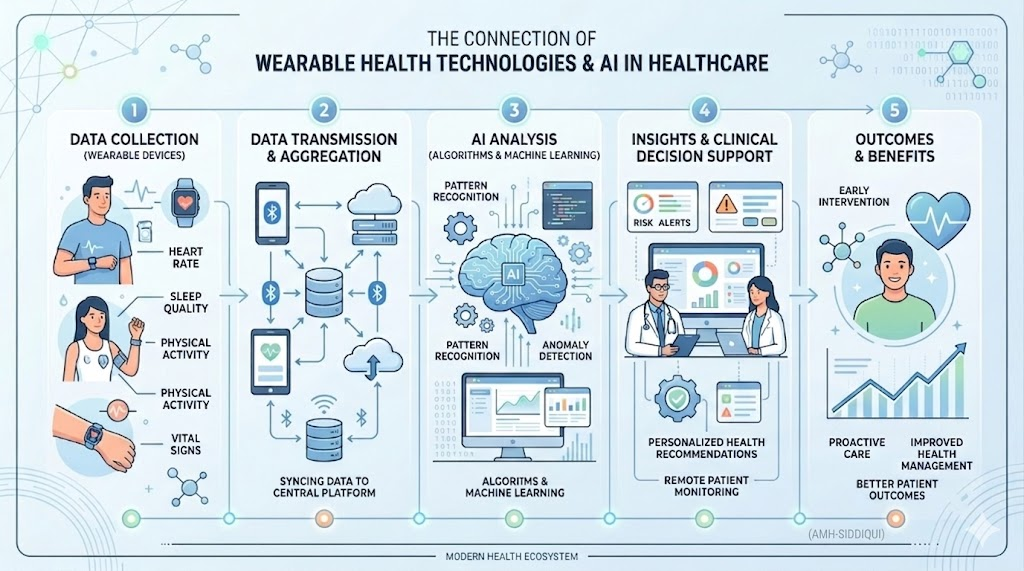
Today, wearable devices can track heart rate, sleep quality, oxygen levels, stress patterns, physical activity, and even early signs of potential health problems in real time. These technologies are not only helping individuals improve their daily wellness habits, but they are also supporting healthcare professionals with remote patient monitoring and preventive care.
As digital healthcare continues to evolve, wearable technology is becoming an essential part of modern medicine. The rise of artificial intelligence, Big Data, and smart healthcare systems is further accelerating innovation in this field.
Readers interested in the connection between AI and healthcare technologies can also explore:
What is Wearable Health Technology?
Wearable health technology refers to smart electronic devices worn on the body that collect, analyze, and sometimes transmit health-related data. These devices are designed to support fitness tracking, health monitoring, medical diagnosis, and patient care.
Some common examples of wearable health devices include:
- Smartwatches
- Fitness bands
- Heart rate monitors
- Sleep trackers
- Continuous glucose monitors
- Smart medical sensors
- Smart clothing
Most wearable devices connect with smartphones, apps, or cloud-based platforms to provide users with real-time health insights and long-term health data analysis.
How Wearable Health Technology Works
Wearable devices rely on a combination of sensors, wireless communication systems, artificial intelligence, and cloud computing to collect and process health information.
Main Components of Wearable Devices
- Health monitoring sensors
- Wireless connectivity systems
- Mobile applications
- Artificial intelligence tools
- Cloud-based storage platforms
Together, these technologies help users and healthcare providers monitor health conditions more efficiently and continuously.
The growing role of AI and intelligent systems in modern technologies is also discussed in:
Benefits of Wearable Health Technology
Wearable healthcare devices offer several important benefits for both individuals and healthcare systems.
1. Real-Time Health Monitoring
One of the biggest advantages of wearable technology is continuous health tracking. These devices can monitor:
- Heart rate
- Blood pressure
- Sleep patterns
- Oxygen saturation
- Physical activity levels
Real-time monitoring allows users to detect health changes early and take preventive action before conditions become serious.
2. Improved Fitness and Wellness
Fitness-focused wearables encourage healthier lifestyles by helping users:
- Count daily steps
- Track workouts
- Monitor calories burned
- Improve sleep habits
- Manage stress levels
Many people use wearable devices as motivation to stay active and maintain healthier routines.
3. Remote Patient Monitoring
Wearable health devices play an important role in remote healthcare, especially for patients with chronic conditions such as:
- Diabetes
- Heart disease
- Hypertension
Doctors can monitor patient data remotely, reducing the need for frequent hospital visits while improving long-term care management.
The role of intelligent healthcare systems and data-driven technologies is becoming increasingly important in modern healthcare environments.
Related reading:
4. Early Disease Detection
Advanced wearable technologies can detect unusual health patterns and alert users to potential medical concerns at an early stage.
Early detection may help:
- Reduce emergency health situations
- Lower healthcare expenses
- Improve treatment outcomes
- Support preventive healthcare
5. Better Healthcare Data Collection
Wearable devices generate large amounts of valuable health data that can support:
- Medical research
- Predictive analytics
- Personalized healthcare
- Remote patient monitoring
- Healthcare decision-making
The relationship between Big Data and intelligent technologies is discussed further in:
Applications of Wearable Health Technology
Wearable healthcare technologies are now being used across multiple industries and healthcare sectors.
Healthcare and Hospitals
Hospitals and clinics use wearable devices for:
- Remote patient monitoring
- Recovery tracking
- Elderly patient care
- Chronic disease management
Sports and Fitness
Athletes and fitness enthusiasts use wearables to:
- Monitor performance
- Analyze workout intensity
- Improve training efficiency
- Track heart rate and recovery
Workplace Safety
Some organizations use wearable technology to improve employee safety by monitoring:
- Fatigue levels
- Stress conditions
- Environmental exposure risks
Mental Health Monitoring
Modern wearable devices are also supporting mental wellness by helping users track:
- Stress levels
- Anxiety patterns
- Sleep quality
- Mood-related changes
These insights can improve self-awareness and encourage healthier mental health habits.
Challenges of Wearable Health Technology
Despite its many advantages, wearable health technology still faces several important challenges.
Data Privacy and Security
Health information is highly sensitive, making cybersecurity and data privacy major concerns. Protecting personal medical data is essential as wearable devices become more connected to digital healthcare systems.
Readers interested in data privacy and digital regulations can also explore:
- EU GDPR – Article 22: Automated Decision-Making and Profiling
- EU GDPR – Article 25: Data Protection by Design and by Default
Device Accuracy
Some wearable devices may occasionally produce inaccurate readings, which can affect health monitoring and medical decisions.
High Costs
Advanced wearable healthcare devices can still be expensive, limiting accessibility for some users.
User Adoption Challenges
Long-term use of wearable devices may decline because of issues such as:
- Battery limitations
- Privacy concerns
- Comfort issues
- Lack of user motivation
The Future of Wearable Health Technology
The future of wearable healthcare technology looks extremely promising. Advances in artificial intelligence, machine learning, smart sensors, and predictive analytics are expected to make healthcare more accurate, personalized, and efficient.
Future wearable technologies may include:
- AI-powered diagnostics
- Smart medical implants
- Advanced biosensors
- Real-time disease prediction systems
- Intelligent healthcare ecosystems
As healthcare becomes increasingly digital, wearable devices are expected to play a much larger role in preventive medicine and personalized treatment.
Readers interested in artificial intelligence and future technologies can also read:
Conclusion
Wearable health technology is transforming modern healthcare by making health monitoring more accessible, accurate, and personalized. From fitness tracking to remote patient monitoring, these smart devices are helping individuals take greater control of their health while supporting healthcare professionals with real-time medical insights.
Although challenges such as data privacy, device accuracy, and affordability still exist, ongoing advancements in artificial intelligence, Big Data, and smart healthcare systems continue to improve wearable technologies every year.
As digital healthcare continues to evolve, wearable health technology is expected to become an even more important part of everyday life and modern medicine.
“When healthcare combines with smart technology, it creates a future where health services become more connected, preventive, and easier for everyone to access.”
