










Introduction
The Internet of Things (IoT) has become a major part of modern technology. From smart homes and wearable devices to connected healthcare systems and industrial automation, IoT is changing the way people live and businesses operate.
Today, billions of smart devices are connected through the internet, helping users automate daily tasks, collect real-time information, and improve efficiency. While these technologies offer convenience and innovation, they also create serious cybersecurity concerns.
Most IoT devices collect and exchange sensitive data, making them attractive targets for cybercriminals. Weak passwords, outdated software, and poor security settings can expose connected devices to hacking attempts, malware, and data breaches.
This is why Internet of Things (IoT) security has become increasingly important. Strong IoT security helps protect connected systems, personal information, and digital infrastructure from modern cyber threats.
Readers interested in cybersecurity and intelligent technologies can also explore:
Understanding the Internet of Things (IoT)
The Internet of Things refers to physical devices connected to the internet that can collect, share, and process data automatically.
These devices communicate using sensors, software, cloud systems, and wireless networks to perform tasks with little or no human involvement.
Common examples of IoT devices include:
- Smart home systems
- Fitness trackers and smartwatches
- Security cameras
- Smart TVs and appliances
- Connected vehicles
- Healthcare monitoring devices
- Industrial sensors
As IoT technology continues growing, connected devices are becoming smarter and more integrated into everyday life. This rapid expansion also increases the need for stronger Internet of Things (IoT) security and connected device protection.
Related reading:
What is IoT Security?
IoT security refers to the technologies, cybersecurity practices, and protection systems used to secure connected devices and networks from cyber threats.Main Goals of IoT Security
The main goal of Internet of Things (IoT) security is to protect:
- User data
- Connected devices
- Communication networks
- Cloud systems
- Smart infrastructures
IoT security also helps prevent unauthorized access, malware attacks, identity theft, and system failures.
Unlike traditional computers, many IoT devices remain connected to the internet continuously. Because of this, they require stronger cybersecurity measures and regular monitoring to stay secure.
Why Internet of Things (IoT) Security Matters
As smart technologies continue expanding across homes, businesses, healthcare, and industries, cyberattacks targeting IoT devices are increasing rapidly.
Many connected devices have limited built-in security, which makes them vulnerable to hackers. Without proper IoT cybersecurity protections, attackers can gain access to sensitive information and connected networks.
Importance of IoT Security
- Protects personal and business data
- Prevents unauthorized access
- Reduces cybersecurity risks
- Improves digital privacy
- Protects smart infrastructure
- Supports safe business operations
Strong Internet of Things (IoT) security is essential for maintaining user trust and creating safer digital environments.
The role of intelligent systems and secure digital technologies is also discussed in:
Major IoT Security Risks
Although IoT technology offers many benefits, it also introduces several cybersecurity challenges.
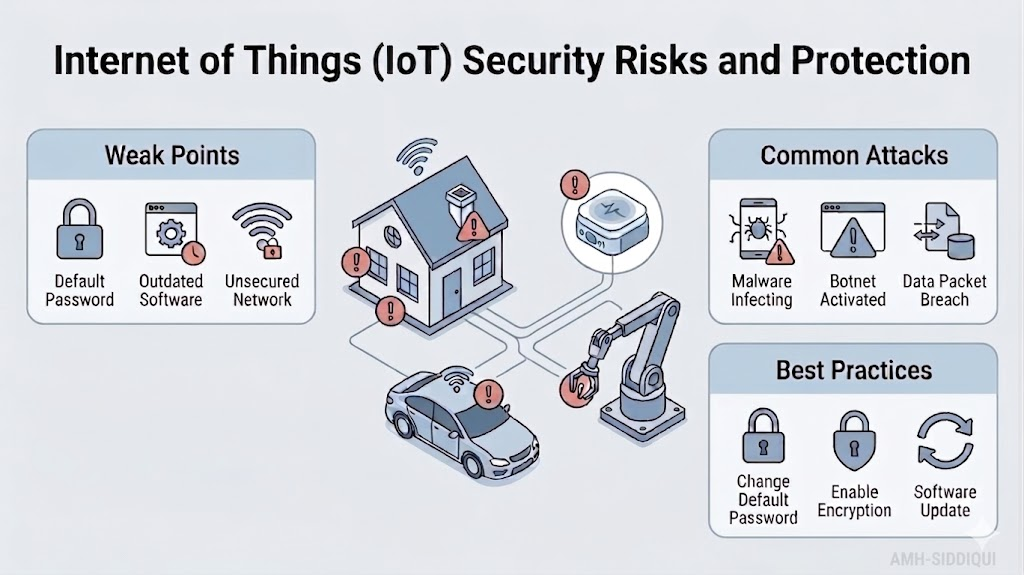
1. Weak Passwords
Many users never change default passwords on smart devices. Weak passwords make IoT devices easier to hack.
Using strong and unique passwords is one of the simplest ways to improve IoT device security.
2. Outdated Software
Outdated firmware and software may contain security vulnerabilities that cybercriminals can exploit.
Regular updates help improve Internet of Things cybersecurity and reduce security risks.
3. Data Privacy Concerns
Many IoT devices collect sensitive information, including:
- Health records
- Location data
- Financial information
- User activity patterns
Poor data protection can lead to privacy violations and cybercrime.
Readers interested in digital privacy and data protection can also explore:
- EU GDPR – Article 22: Automated Decision-Making and Profiling
- EU GDPR – Article 25: Data Protection by Design and by Default
- EU GDPR Articles – MDM Team
4. Insecure Networks
Unsecured internet connections can expose connected devices to malware, hacking attempts, and data theft.
Strong IoT network security practices are important for protecting digital systems and connected environments.
5. Device Vulnerabilities
Some manufacturers focus more on affordability and convenience than cybersecurity. As a result, certain smart devices may contain built-in security weaknesses.
Improving connected device protection is becoming increasingly important as IoT adoption grows worldwide.
Common IoT Cyberattacks
Cybercriminals use different methods to attack IoT systems and connected devices.
Malware Attacks
Hackers may install malicious software to control or damage smart devices remotely.
Botnet Attacks
Compromised IoT devices can become part of botnets used to launch large cyberattacks.
Data Breaches
Attackers may steal sensitive information stored or transmitted by IoT devices.
Denial-of-Service (DoS) Attacks
These attacks overload systems or networks with excessive traffic to disrupt operations.
These cyber threats highlight why strong Internet of Things (IoT) security is essential in modern digital environments.
Best Practices for IoT Security
Organizations and individuals can improve IoT cybersecurity by following strong security practices.
1. Use Strong Passwords
Replace default passwords with unique and secure credentials for every device.
2. Keep Devices Updated
Install software and firmware updates regularly to fix vulnerabilities and improve device security.
3. Enable Encryption
Encryption helps secure sensitive data shared between connected devices and networks.
Advanced technologies such as:
are also helping strengthen modern cybersecurity systems.
4. Secure Networks
Using firewalls, VPNs, and secure Wi-Fi networks can improve IoT network security significantly.
5. Monitor Connected Devices
Continuous monitoring helps detect suspicious activity and reduce cybersecurity risks early.
Related reading:
Applications of IoT Security
Internet of Things (IoT) security is important across multiple industries and smart environments.
Smart Homes
IoT security protects:
- Smart locks
- Home automation systems
- Smart speakers
- Security cameras
Healthcare
Healthcare organizations use IoT security to protect connected medical devices and patient monitoring systems.
Readers interested in healthcare technologies can also read:
Industrial Systems
Industrial IoT security helps protect manufacturing systems, logistics operations, and energy infrastructure.
Smart Cities
IoT cybersecurity supports secure transportation systems, traffic management, and connected public services.
The Future of IoT Security
As IoT technology continues evolving, cybersecurity solutions are becoming more advanced and intelligent.
Future Internet of Things (IoT) security trends may include:
- AI-powered cybersecurity systems
- Advanced threat detection
- Blockchain-based authentication
- Automated security monitoring
- Zero-trust security models
Artificial intelligence and Big Data technologies are expected to improve cybersecurity automation and threat detection in the future.
Readers interested in AI and future technologies can also explore:
- Big Data vs Traditional Data, Data Warehousing, AI, and Beyond
- Human Brain vs Artificial Intelligence
Conclusion
Internet of Things (IoT) security has become a critical part of modern cybersecurity. As more smart devices connect homes, businesses, industries, and healthcare systems, protecting connected environments from cyber threats is more important than ever.
Strong passwords, regular software updates, encryption, and secure networks play a major role in improving digital safety and reducing vulnerabilities. At the same time, businesses and organizations must continue investing in smarter cybersecurity systems to stay protected against evolving threats.
As technology becomes increasingly connected, IoT security will continue shaping the future of safe digital communication, connected devices, and smart infrastructure worldwide.
“In today’s interconnected world, strong IoT security is essential for protecting digital systems, connected devices, and user trust.”
