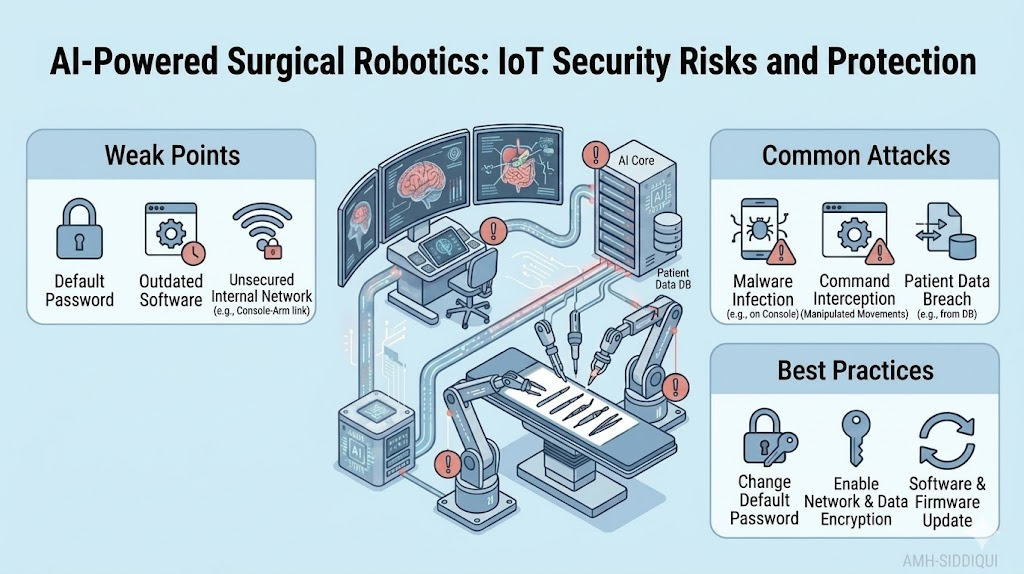
Robotic technology is transforming modern healthcare, especially in the field of surgery. Today, robots assisting modern surgeries are helping surgeons perform complex procedures with greater precision, flexibility, and control. These advanced robotic systems are improving surgical outcomes while reducing risks, complications, and recovery time for patients.
Over the past few years, hospitals worldwide have increasingly adopted robotic-assisted surgery because it supports minimally invasive procedures and enhances patient care. In addition, modern surgical robots allow doctors to operate with improved accuracy through high-definition imaging and advanced computer-guided systems.
Although robotic systems are highly advanced, they do not replace surgeons. Instead, they assist healthcare professionals in making surgeries safer, more efficient, and more precise.
Readers interested in healthcare innovation and AI technologies can also explore:
Robotic-assisted surgery is a medical procedure in which surgeons use robotic systems and computer technologies to perform operations with enhanced precision.
During the procedure, the surgeon controls robotic arms using a specialized console while viewing the surgical area through high-definition 3D imaging systems. As a result, surgeons can perform delicate procedures with smaller movements and greater control.
These robotic systems are designed to support surgeons rather than operate independently. Most importantly, they help improve surgical precision during highly sensitive operations.
How Robots Assisting Modern Surgeries Work
Modern surgical robots combine several advanced technologies to support healthcare professionals during operations.
Key Technologies Used in Surgical Robotics
Artificial Intelligence (AI)
High-definition cameras
Robotic mechanical arms
Real-time data processing
Precision motion-control systems
Computer-assisted surgical planning
During surgery, the robotic system translates the surgeon’s hand movements into highly accurate actions inside the patient’s body. Consequently, this reduces hand tremors and allows more precise surgical procedures.
Furthermore, many robotic systems provide magnified 3D visualization, helping surgeons make more informed decisions during operations.
Robots assisting modern surgeries are now widely used across multiple medical specialties.
1. Heart Surgery
Robotic systems help surgeons perform delicate heart procedures with minimal invasion. Because of smaller incisions, patients often experience less pain, reduced blood loss, and faster recovery times.
2. Brain Surgery
In neurosurgery, robotic systems assist doctors in navigating extremely sensitive areas of the brain with greater precision and accuracy.
As a result, surgeons can reduce risks associated with complex neurological procedures.
3. Orthopedic Surgery
Robots are increasingly used in knee and hip replacement surgeries to improve implant positioning and surgical precision.
Additionally, robotic guidance can improve long-term surgical outcomes for patients.
4. Cancer Treatment
Robotic-assisted surgery allows doctors to remove tumors more accurately while protecting nearby healthy tissues.
Therefore, minimally invasive robotic procedures can help reduce complications during cancer treatments.
5. Gynecological and Urological Procedures
Many gynecological and urological surgeries now rely on robotic systems because they improve precision and reduce recovery time.
Benefits of Robots Assisting Modern Surgeries
Robotic-assisted surgery offers several important advantages for both patients and healthcare professionals.
1. Higher Surgical Precision
One of the biggest benefits of robots assisting modern surgeries is improved precision. Robotic systems reduce hand tremors and support highly accurate surgical movements.
2. Smaller Incisions
Most robotic surgeries involve minimally invasive techniques that use tiny incisions. Consequently, patients experience less scarring and physical trauma.
3. Faster Recovery Time
Patients often recover more quickly after robotic-assisted procedures. In many cases, shorter hospital stays also reduce healthcare costs.
4. Reduced Pain and Blood Loss
Because robotic procedures are minimally invasive, patients usually experience less postoperative pain and lower blood loss.
5. Better Visualization for Surgeons
High-definition 3D imaging systems allow surgeons to view the surgical area more clearly during operations.
As a result, doctors can make more precise surgical decisions.
Role of Artificial Intelligence in Surgical Robotics
Artificial Intelligence is playing an increasingly important role in robotic-assisted surgery. AI-powered systems help improve surgical planning, image analysis, and real-time decision-making.
For example, AI technologies can analyze patient data, identify abnormalities, and assist surgeons during complex procedures.
Moreover, machine learning systems can learn from previous surgeries and improve robotic performance over time.
The growing role of intelligent technologies in healthcare is also discussed in:
Although robots assisting modern surgeries offer many benefits, several challenges still exist.
1. High Costs
Robotic surgical systems are expensive to purchase, maintain, and operate. Therefore, some hospitals and healthcare facilities may struggle to afford advanced surgical robotics.
2. Need for Specialized Training
Surgeons require extensive training to operate robotic systems safely and effectively.
Furthermore, healthcare professionals must continuously update their technical skills as robotic technologies evolve.
3. Technical Limitations
Like all digital systems, surgical robots may face software issues, hardware malfunctions, or connectivity problems.
As a result, healthcare organizations must maintain strong technical support systems.
4. Limited Accessibility
Not all healthcare facilities, especially in developing regions, have access to robotic-assisted surgical technologies.
Consequently, access to advanced robotic surgery remains unequal in some parts of the world.
The Future of Robots Assisting Modern Surgeries
The future of robotic-assisted surgery looks extremely promising. Researchers are developing smarter robotic systems capable of improving automation, precision, and real-time decision-making.
Future advancements may include:
AI-powered autonomous surgical assistance
Remote surgeries using 5G technology
Enhanced robotic imaging systems
Personalized surgical planning
Integration with augmented reality (AR)
Integration with virtual reality (VR)
In addition, healthcare organizations are investing heavily in AI-driven healthcare technologies to improve surgical efficiency and patient outcomes.
Readers interested in future healthcare technologies can also explore:
Robots assisting modern surgeries are transforming healthcare by improving surgical precision, reducing recovery times, and enhancing patient safety. These advanced technologies are helping surgeons perform complex procedures more effectively while minimizing risks and complications.
Although challenges such as high costs, technical limitations, and limited accessibility still exist, the future of robotic-assisted surgery remains highly promising. Furthermore, as Artificial Intelligence and healthcare technologies continue evolving, robotic systems will play an even greater role in shaping the future of modern medicine.
“When human expertise and intelligent robotics work together, modern surgery becomes safer, smarter, and more precise.”
A dedicated professional with a background in Biomedical Engineering and experience in academic management, curriculum coordination, and educational leadership. Passionate about healthcare technology, research, and digital innovation, with a strong focus on creating impactful learning and professional development opportunities.